
In a world where art is often confined to gallery walls, Chillida Leku It stands out as a refuge of creative freedom and deep connection with nature, offering an experience that is, in every sense, monumental.
From afar you can see the imposing wrought iron and granite sculptures of the great Basque artist Eduardo Chillida intertwining history and culture amidst the green landscapes of Guipúzcoa. In Hernani, a town near San Sebastián, stands Chillida Leku, a unique museum dedicated to the work of the sculptor, which this year celebrates the centenary of his birth with a large exhibition from the Telefónica Collection and pieces from the museum's own from the 1990s and 2000s.
The artist's most photographed work is “The Comb of the Wind”, located facing the sea in San Sebastián, but monumental pieces can also be found in almost twenty countries, forming part of the urban landscape or traditional museums such as in Germany, Sweden, France or the United States. It is worth highlighting “Seeking the Light”, the artist's last large-scale work, which was created in 1997 and located in 2002 in the ‘Pinakothek der Moderne’, a contemporary art museum in Munich, or “Berlin”, the large steel sculpture located in front of the Chancellery in the German capital.
Chillida's place
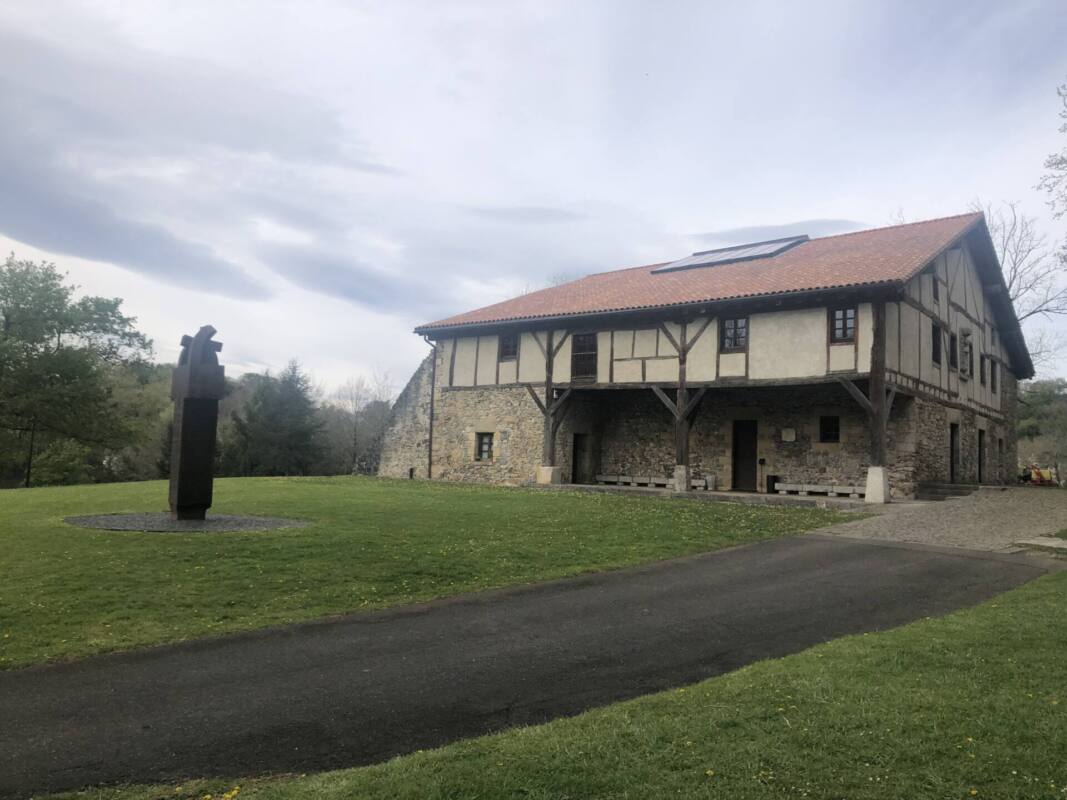
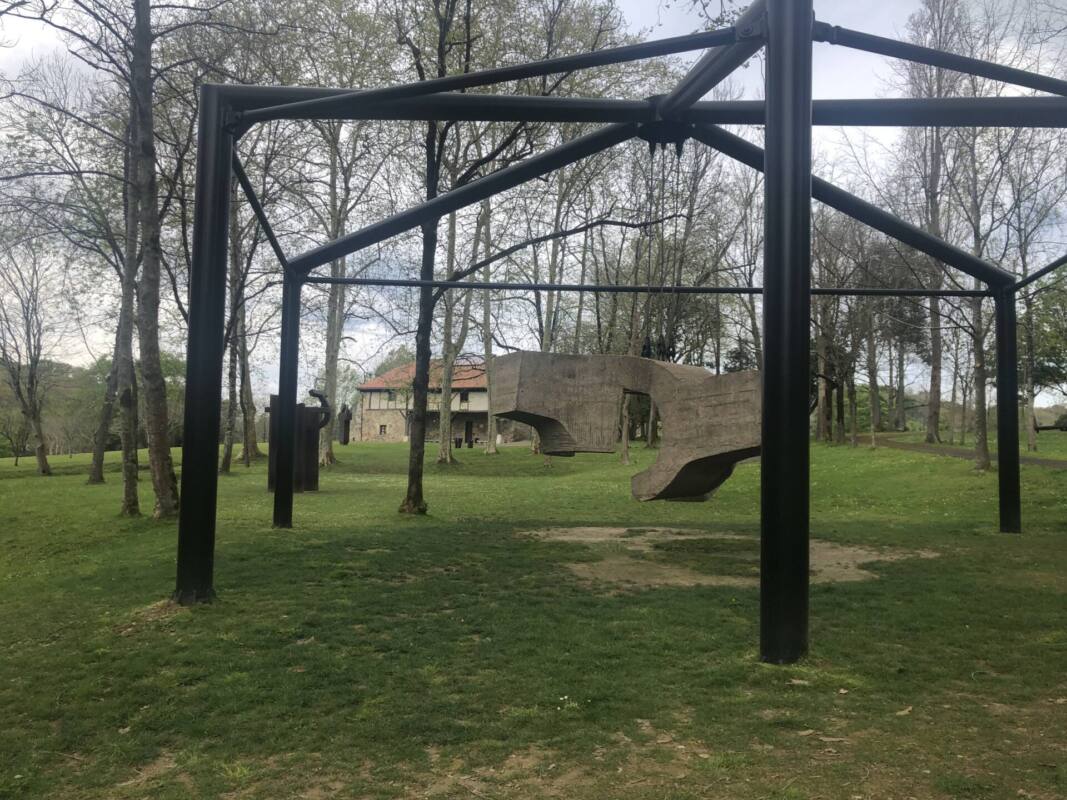
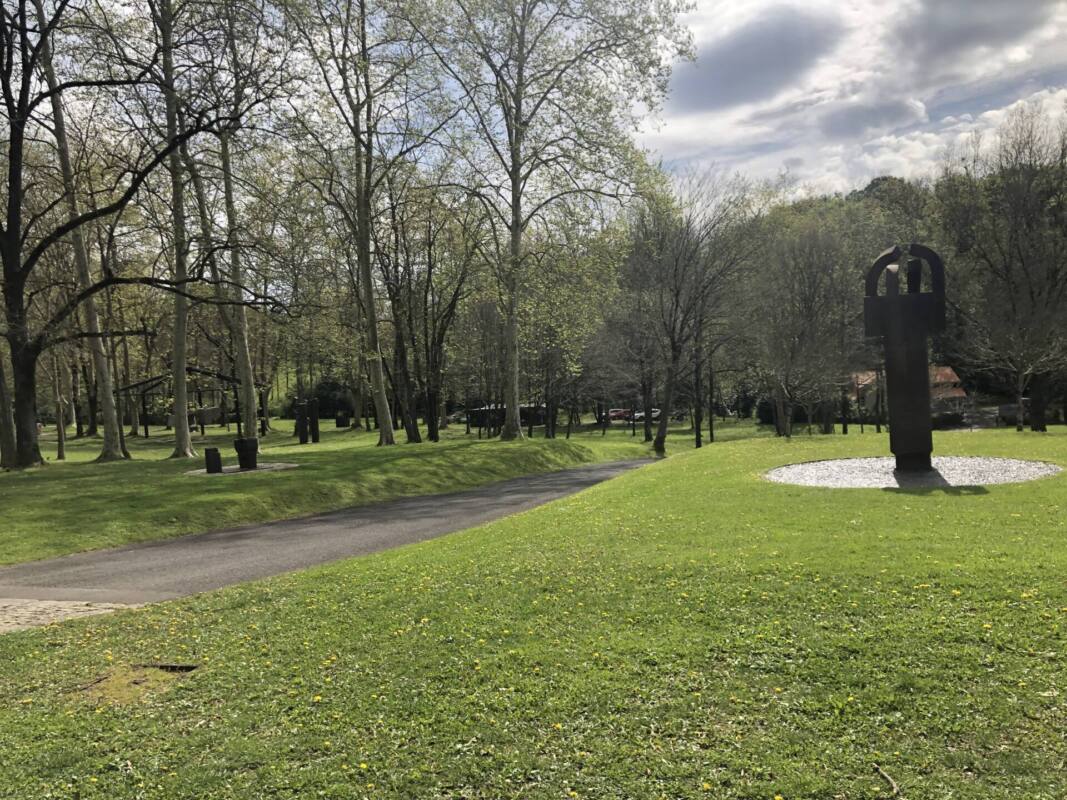
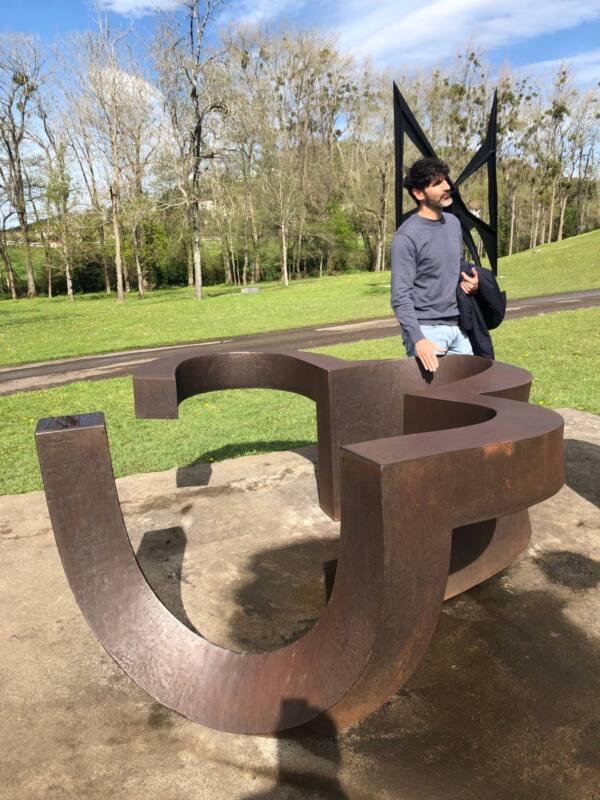
Chillida Leku, which means «The place of Chillida» in Basque, was inaugurated in 2000 and is much more than a conventional museum, as it is located outdoors and the iron and granite sculptures are harmoniously dispersed in the landscape, integrating with the trees, the grass and the open sky.
Located on an old 11-hectare estate in Hernani, its main structure is the Zabalaga farmhouse, a 16th-century building that has been carefully restored with the idea of preserving its identity and introducing space inside to house a huge collection of sculptures and drawings by the Basque master. However, what truly sets Chillida Leku apart is its concept: the sculptures are not confined within the walls of a gallery; instead, they unfold outside, interacting with the changing daylight, rain, and wind. This approach allows visitors to experience the works from different perspectives, highlighting their monumentality, their poetry, and their continuous dialogue with the surrounding space.
Eduardo Chillida was born in San Sebastián on January 10, 1924 and died in the same city on August 19, 2002; his great love and life partner was Pilar Belzunce, with whom he had eight children and 27 grandchildren. One of them, Mikel Chillida, development director of the museum dedicated to the artist, welcomes us to guide us through this impressive collection of sculptures and drawings, and tell us about his grandfather, the aitone, who had a vocation to share so that his work would belong to everyone and remembers one of his favorite phrases: «what belongs to one, belongs to almost no one». Chillida was interested in asking questions and experimenting, in seeking beauty and harmony while respecting the materials he worked with, and looking for their own pulse in them so that, after creating his sculptures, the material would give them its final brushstroke.
A tour of Chillida's work
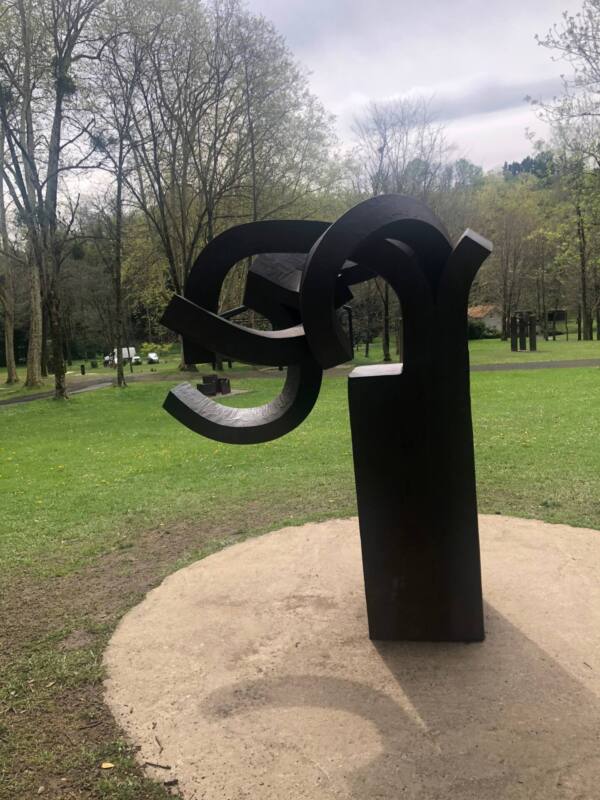
The garden of this museum offers us an immersive experience that connects art with nature. The pieces can be touched to feel the different textures, enter them and become part of the space, or contemplate their dialogue with the environment.
In his works there is a game of emptiness-fill, of folds and folds, of light and shadow and an amalgamation of strength and volatility, explains Mikel Chillida.
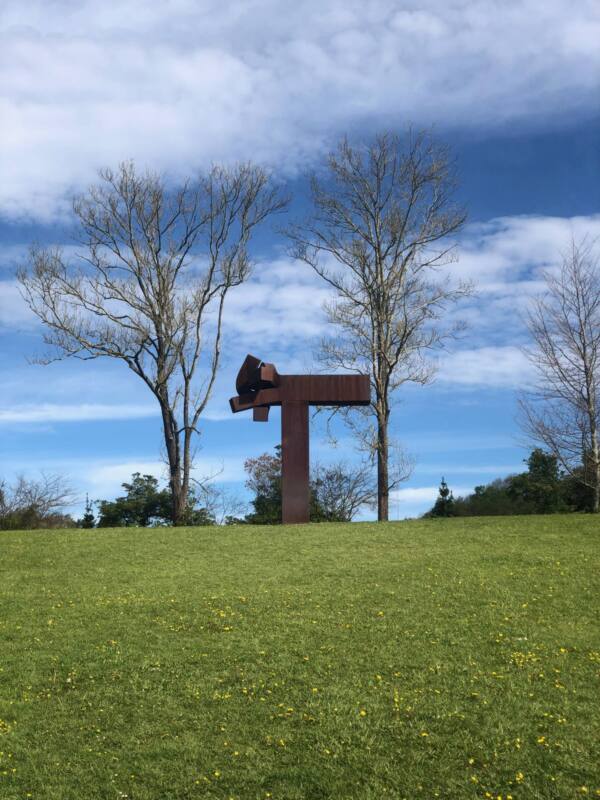
Walking along the trails of Chillida Leku, we see some of the artist's most iconic pieces, such as “Wind Comb XV“, a monumental work that defies the horizon with its robust and ethereal structure at the same time; The Arch of Freedom, a work that was planned for a place in Paris and that remained in the museum; Besarkada XIV, Tribute to Braque, Esertoki III, or the Tribute to Balenciaga, in which he establishes a dialogue with the Gipuzkoan couturier with whom he had ties of friendship and artistic ties.
In the renovated facilities of the Zabalaga farmhouse, temporary and permanent exhibitions offer us a more intimate view of Chillida's creative process, and the evolution of his artistic thinking through drawings, models and smaller-scale works.
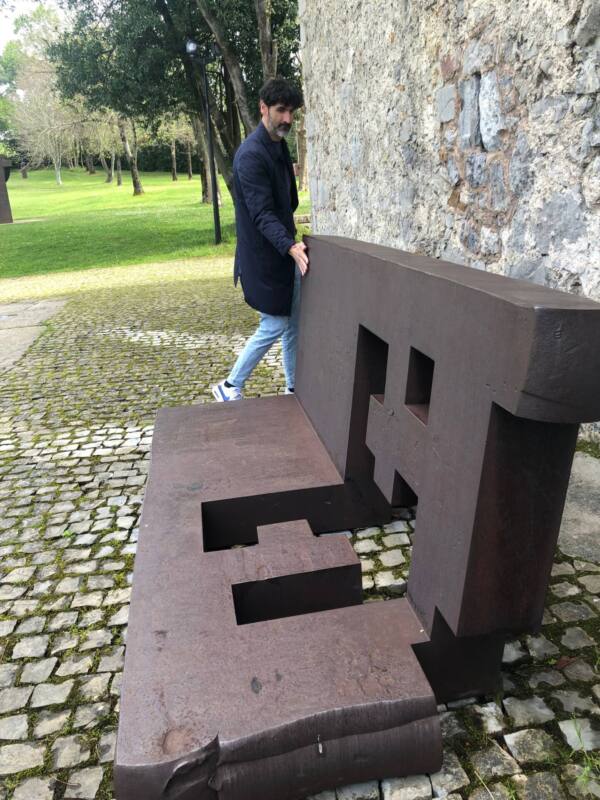
Chillida Leku is not only a place to admire art, explains the sculptor's grandson, but also a space for reflection and dialogue. Since its reopening in 2019 under the joint management of the Chillida family and the Swiss gallery Hauser & Wirth, this museum has undergone a revitalization that has attracted new audiences and reinforced its position as a cultural benchmark.
One of the major milestones in the commemoration of Eduardo Chillida's Centenary is 100 years of Eduardo Chillida with the Telefónica CollectionThe exhibition takes place inside the museum, covering the entire Zabalaga hamlet, and can be visited until October 13, 2024.
In addition, to celebrate the centenary of his birth, the Chillida Foundation has organized a series of cultural events at the museum, ranging from concerts, readings and cultural exchanges, to a documentary about this universal artist that will be presented in September at the San Sebastian International Film Festival.
Mikel Chillida also announced two other exhibitions in San Sebastián, in San Telmo and in Tabacalera, and at the end of the year one at the museum of contemporary art of the Basque Country, in Álava. Other openings will be planned for 2025 in Valladolid and at the San Diego Museum of Art in the United States.
Essential in the Basque Country
For those visiting the Basque Country, Chillida Leku is a must-see stop. Its combination of monumental art and natural landscape offers a unique experience that transcends mere observation, inviting visitors to immerse themselves in a continuous dialogue between Chillida's work and the environment that welcomes it. In every corner of the museum, you can feel the presence of the sculptor, his respect for nature and his incessant search for harmony between man and his environment.
More Information
Chillida Leku
Address: Jauregi Bailara, 66, 20120 Hernani, Gipuzkoa, Spain.
Opening hours: Tuesday to Sunday, from 10:00 to 18:00.
Admission: From 14€ to 7€.
By. Elsa Mogollón Wendeborn
Photography: Elsa Mogollón Wendeborn